8
Julio Médem / Spain / 2025 / 126 min
Malaga Int'l Film Festival
Audience AwardSan Sebastian Int'l Film Festival
Mediterrane Film Festival Malta
Jury Prize
Spanish Film Club
Related Films
 Almost Paradise(Casi el Paraíso)Edgar San JuanAlmost Paradise stands out as one of the most incisive and entertaining Mexican comedies of recent years—sharp, politically charged, and deeply rooted ...
 ZafariMariana RondónDirected by acclaimed Venezuelan filmmaker Mariana Rondón, Zafari is a bold and unsettling exploration of social fracture, power, and survival in ...
 ASCO: Without PermissionTravis Gutiérrez SengerASCO: Without Permission challenges the limits of documentary conventions to tell the story of a revolutionary Chicano art group who turned 1970s Los ...
 A Wolf Among Swans(Um lobo entre os cisnes)Marcos Schechtman, Helena VarvakiA Wolf Among Swans is a striking biographical drama that follows the extraordinary journey of Thiago Soares, a boy from the suburbs of Rio de Janeiro ...
 Aztec Batman: Clash of Empires(Batman Azteca: Choque de Imperios)Juan Meza-LeónSet at the height of the Aztec Empire, Aztec Batman: Clash of Empires delivers a bold reimagining of the Dark Knight in 16th-century Mesoamerica. The ...
Synopsis
Spanish with English subtitles
With Javier Rey Octavio, Ana Rujas, Alváro Morte
Why will your students love 8? Because it offers a poetic journey through nine decades of Spanish history by one of Europe’s most original cinematic voices, Julio Médem (Sex and Lucía, Lovers of the Arctic Circle), providing rich material for discussing Spain’s transition from Civil War through dictatorship to democracy. Because Médem’s formally daring approach—each chapter as a single continuous shot—invites critical analysis of innovative narrative techniques and the construction of historical memory. And because its exploration of political polarization, collective trauma, and gender evolution connects Spain’s past to contemporary global debates, making it ideal for interdisciplinary discussion across film studies, history, and cultural analysis.
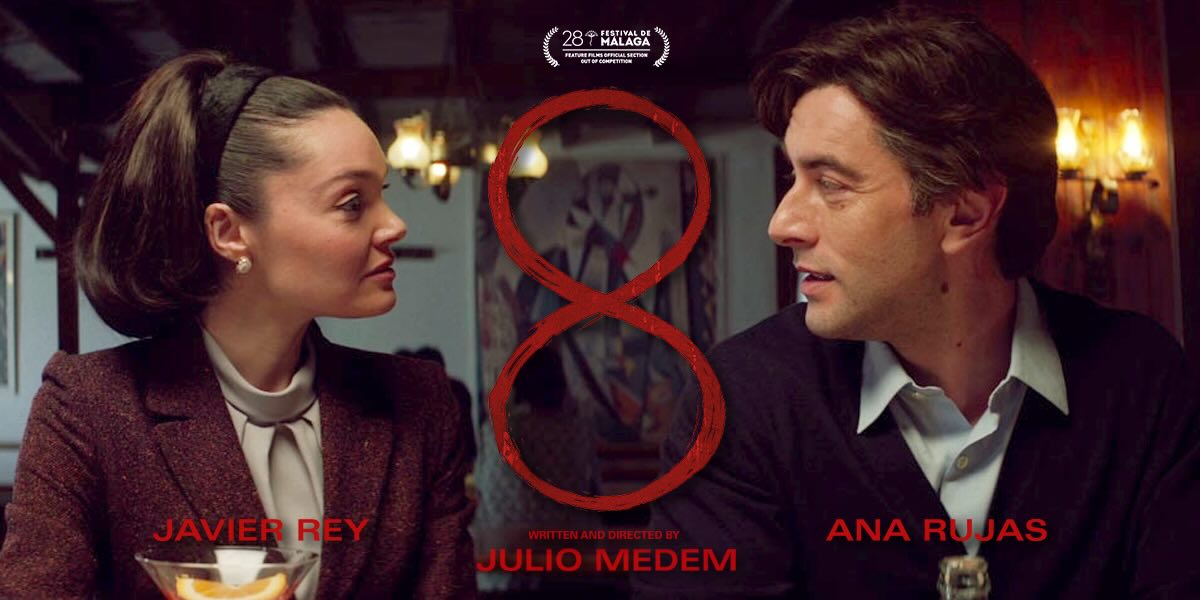
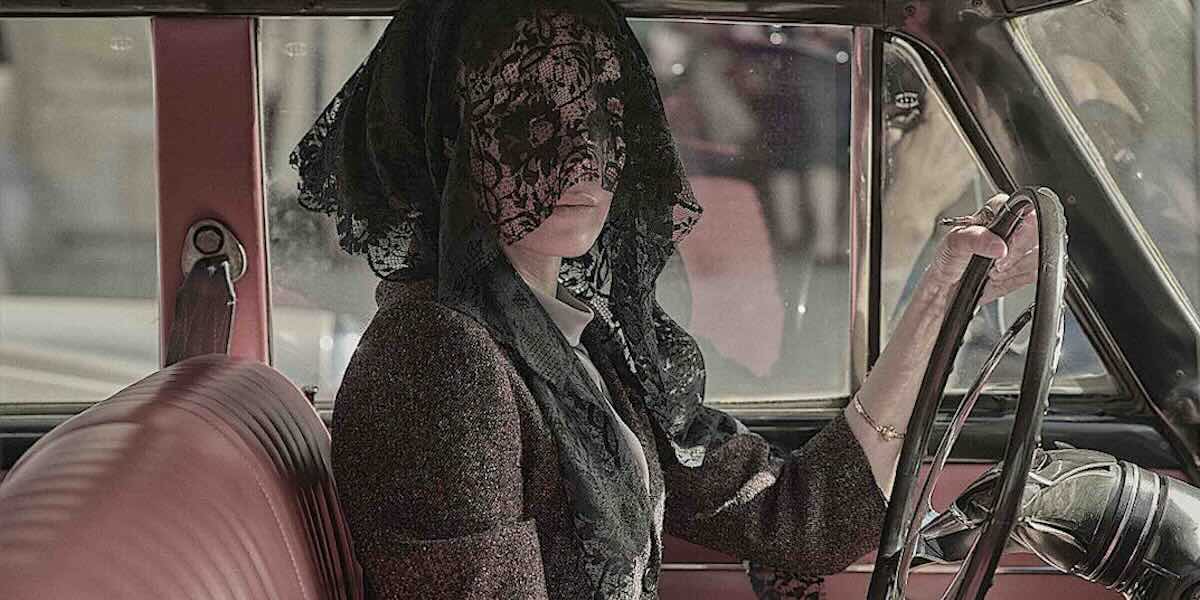
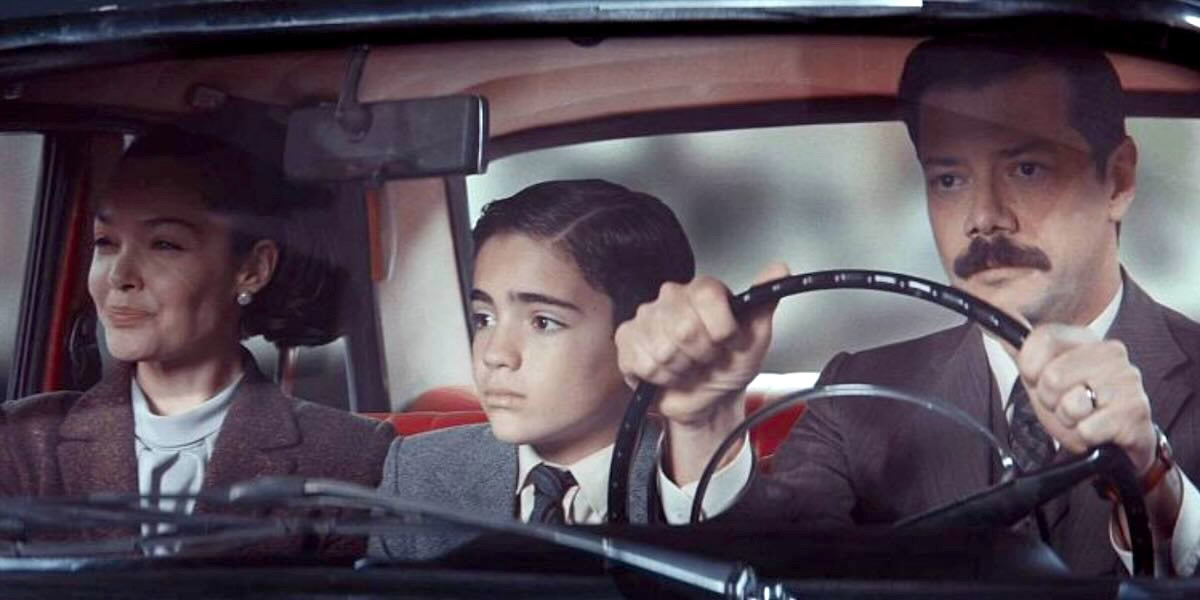
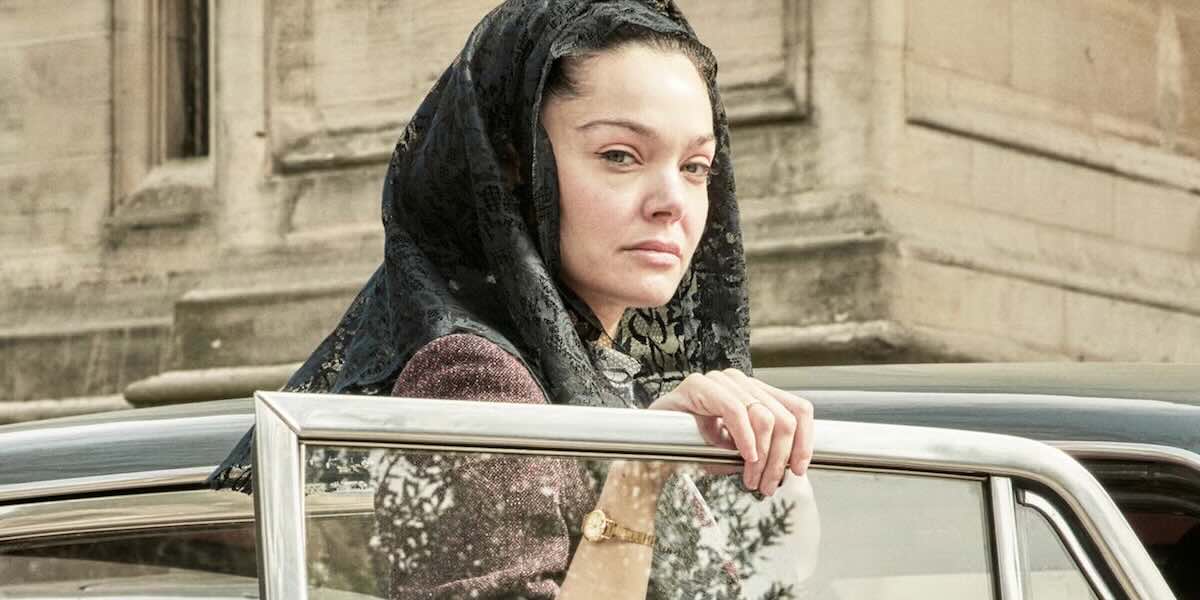
Born on the same day—April 14, 1931, the dawn of Spain’s Second Republic—Octavio and Adela’s lives are destined to intertwine. Over nine decades, their paths cross in eight pivotal encounters that mirror the tumultuous history of 20th-century Spain: the Civil War, Franco’s dictatorship, and the nation’s journey toward reconciliation.
In Julio Médem‘s signature lyrical style, each chapter unfolds as a single continuous shot, capturing intimate moments frozen in time while history rages around them. Their relationship becomes an emotional reflection of Spain itself—divided, wounded, yet searching for forgiveness.
Starring Javier Rey (Cocaine Coast) and Ana Rujas (La Mesías), this formally daring “cinematic poem” explores how personal destinies become inseparable from collective trauma, and asks whether love can bridge the deep divisions that have scarred generations. As Médem puts it, the film addresses “the polarization of society, collective trauma, the evolution of the role of women, and freedom”—themes that resonate far beyond Spain’s borders.
Related Subjects
About the Director
He burst onto the international scene with his debut feature Vacas (Cows, 1992), which won the Goya Award for Best New Director and garnered acclaim at festivals in Berlin, Tokyo, and Turin. His second film, The Red Squirrel (1993), caught the attention of masters like Stanley Kubrick and Steven Spielberg.
Medem’s work has been compared to Krzysztof Kieślowski for its poetic visual language and philosophical depth. His films include Lovers of the Arctic Circle (1998), considered by many to be his masterpiece and a box-office hit in Spain, and Sex and Lucía (2001), which launched Paz Vega’s international career and was the first Spanish feature shot with a high-definition digital camera.
He has also explored documentary filmmaking with La Pelota Vasca (The Basque Ball, 2003), examining political tensions in the Basque Country. Other notable works include Earth (1996), Room in Rome (2010), and Ma Ma (2015) starring Penélope Cruz. His distinctive personal universe has made him one of European cinema’s most original voices. His latest film, 8 (2025), is a poetic journey through nine decades of Spanish history
Press
“It features scenes of great beauty, sensitivity, and emotion.” – Cineuropa
“Julio Médem, one of Spain’s most distinctive cinematic voices, returns to the spotlight with 8, an ambitious and formally daring film that spans 90 years of Spanish history through the intertwined lives of Octavio and Adela.” – Callum McLennan, Variety
“Provocative, stimulating, and pushed to the limit.” – El Mundo
“Julio Médem is such a singular, daring and unique filmmaker that he has effectively become a genre unto himself.” – Alfonso Rivera, Cineuropa
“Visually attractive and boasting technical virtuosity, 8 flows smoothly toward a final piece of advice: 'It’s the politicians' fault.” – Juan Pando, Fotogramas
Notes on the Film
“Both Adela and Octavio are subjected, sometimes cruelly, to their social and political environments. I rehearsed for several months with the actors in an empty room where I marked the spaces on the floor with white tape. So, in addition to the dramatic rehearsal, there was the framing and the layout of the camera, which I did with my mobile phone.
We put everything into a pioneering programme called Hal, like the computer in 2001, A Space Odyssey, designed by my son Peru, an architect and virtual reality artist. Through Hal, I was then able, on my own, to do the choreography, move the characters and frame them by choosing the optics, the light… Hal has been immensely useful to me.
Each chapter has the type of image, the screen format, and the cinematographic style characteristic of its time, from expressionist black and white in the first chapter, inspired by Murnau’s The Vampire of Düsseldorf, with bluish, sepia and pink tints; to strong, contrasting black and white in the Civil War; to the first color in the post-war period; to the neorealist cinema of the 1960s; to the use of new optics in 1977; to the maximum quality of 35 mm in 1992; to digital in HD in 2008; and in 6k in 2021.”
– Julio Medem, Director