Artificial Justice
(Justicia Artificial)
Simón Casal / Spain / 2024 / 98 min


San Sebastián International Film Festival
Shangai International Film Festival
Edinburgh Spanish Film Festival
London Spanish Film Festival
AI International Film Festival
Best Feature DirectorCeltic Media Festival
Best DramaMovies That Matter Film Festival
Spanish Film Club
Related Films
 Pérez RodríguezHumberto TavárezThe debut film from Dominican director Humberto Tavárez, Pérez Rodríguez is a delightful, moving, and funny satire of both the family institution and ...
 A Wolf Among Swans(Um lobo entre os cisnes)Marcos Schechtman, Helena VarvakiA Wolf Among Swans is a striking biographical drama that follows the extraordinary journey of Thiago Soares, a boy from the suburbs of Rio de Janeiro ...
 Aztec Batman: Clash of Empires(Batman Azteca: Choque de Imperios)Juan Meza-LeónSet at the height of the Aztec Empire, Aztec Batman: Clash of Empires delivers a bold reimagining of the Dark Knight in 16th-century Mesoamerica. The ...
 ZafariMariana RondónDirected by acclaimed Venezuelan filmmaker Mariana Rondón, Zafari is a bold and unsettling exploration of social fracture, power, and survival in ...
 8Julio MédemDirected by Julio Médem, one of Spain’s most distinctive and uncompromising cinematic voices, 8 offers a rich case study in auteur cinema and ...
Synopsis
Spanish with English subtitles
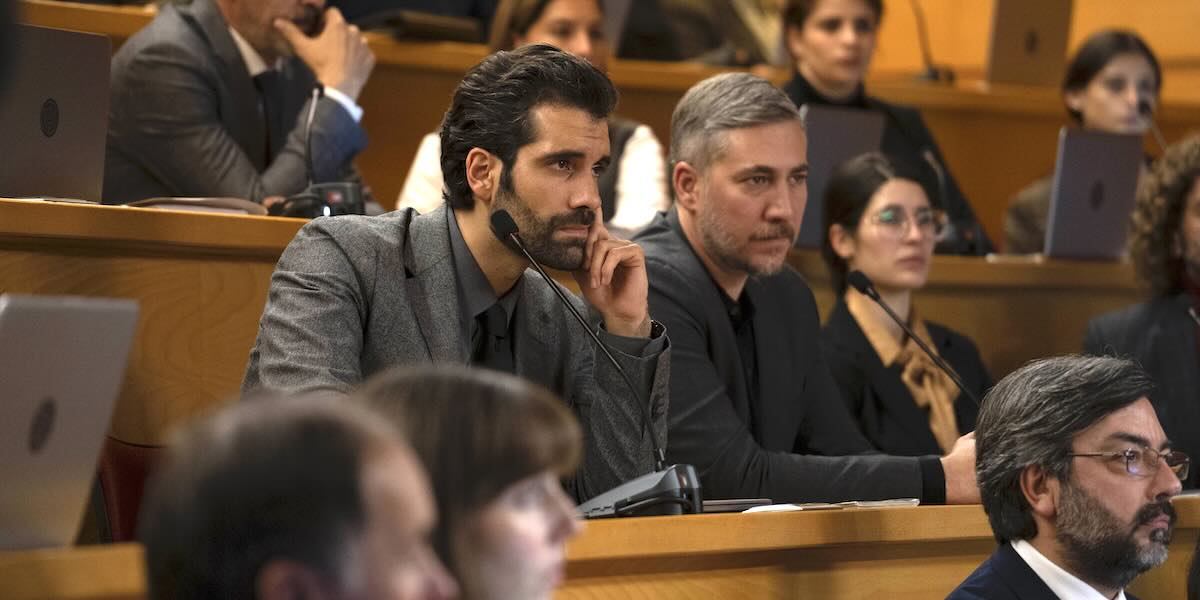
With Verónica Echegui, Alberto Ammann, Tamar Novas, Alba Galocha, Santi Prego
Why will your students love Artificial Justice? Because it sparks a fierce debate about technology, ethics, and power — a premise that mirrors real-world discussions about the role of AI in our lives and institutions. Because it is a timely cyber-political thriller that modernizes the legal thriller genre. And because it will open discussion on Technology and Justice, Ethics and Rights, Power and Control, Cinema and Genre, and Social Context.
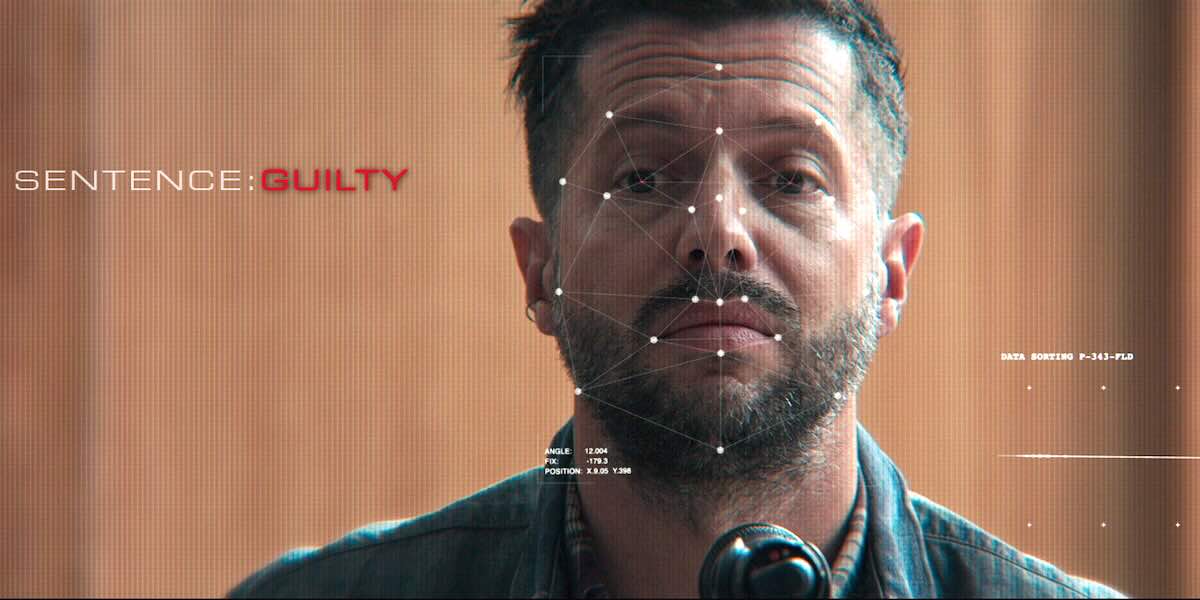
A sharp, gripping Spanish cyber-political thriller, Artificial Justice dives head-first into one of today’s most urgent debates: the limits of artificial intelligence. Simón Casal blends noir, political conspiracy, and cyber-thriller tension while exposing the behind-the-scenes maneuvering of multinational lobbies to imagine a near future where AI could replace judges in the name of efficiency and neutrality.
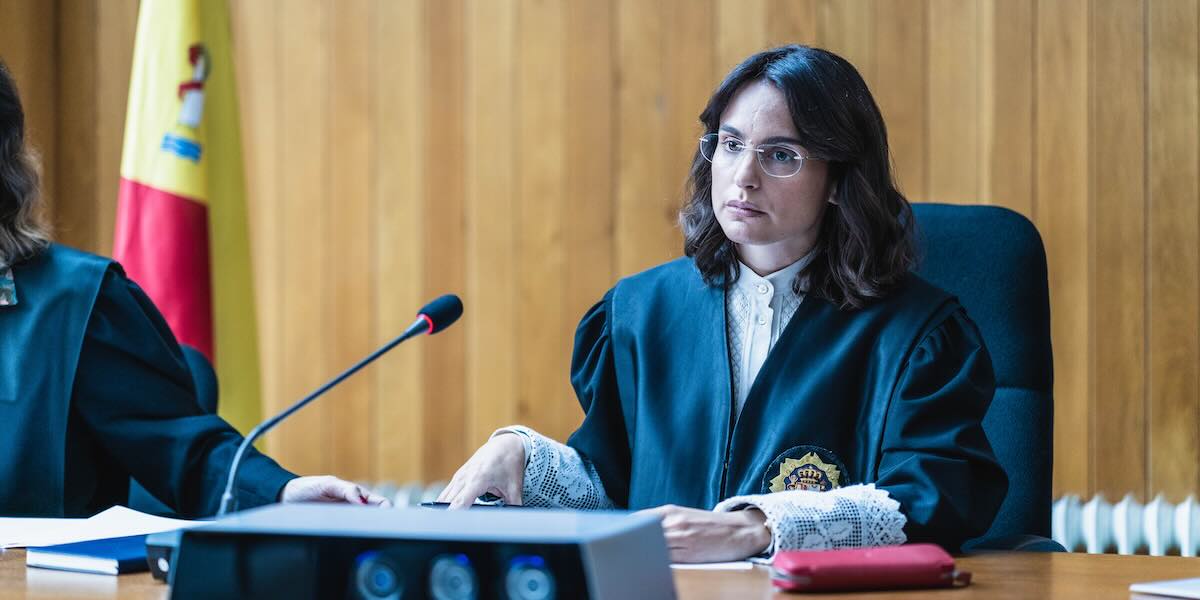
A prominent judge, Carmen Costa (Verónica Echegui), is asked to evaluate these new procedures. When a software developer is found dead, she realizes that her life is in danger and that she must confront the powerful interests at play in the highest levels of the state.
Bold and visually striking, Artificial Justice stands out for its ambition and chilling exploration of who—or what—should be allowed to decide justice.
Related Subjects
About the Director
Casal is also a prolific documentarian whose work frequently centers on social justice and historical memory. His notable projects include the Netflix-distributed documentary The Gourougou Trial (2022), which follows a landmark legal battle over migrant rights at the Spanish border, and the high-rated historical series The Swebian Kingdom of Galicia (2019).
His most recent work, the 2024 political thriller Artificial Justice (Justicia Artificial), confronts the controversial use of AI in the judicial system and was featured at major events like the San Sebastián International Film Festival. Currently, he is developing the international series The Interregnum, which was recently named Best International Project at the Series Mania Forum 2025.
Press
“Casal weaves a reliable mechanism...one that is as fascinating for the debate it proposes as it is engaging for the suspense upon which it is built.” – Paula Arantzazu Ruiz, Cinemania
“A cyber-political thriller charged with dramatic tension that imagines the introduction of artificial intelligence into the Spanish judicial system. The film’s ambition is striking, particularly within the context of Spanish cinema, and deserves recognition for daring to engage with such a complex and timely subject.” – Elsa Fernández-Santos, El Pais
“Themes as topical as judicial reform and the applications of artificial intelligence are addressed—ranging from autonomous vehicles to the possibility of handing down sentences via algorithms. The perspective glimpsed here, which until now remained within the realm of science fiction...is shown to be increasingly present and disturbing.” – Juan Pando, Fotogramas
Notes on the Film
“At its core, Artificial Justice explores the human elements involved in the act of delivering justice. What role do emotion, empathy, and intuition play when judging another human being? Advocates of judicial software argue that justice improves when it is stripped of elements that may distort verdicts—emotional, ideological, gender-based, class-based, or racial biases.
This is precisely the debate we explore through our protagonist, played by Verónica Echegui. She is a highly perfectionist professional, deeply focused on her work. Over the course of the story, she embarks on an inner journey toward the most human aspects of herself, questioning what value these qualities truly have when it comes to administering justice.
Prior to the film, I directed an investigative documentary also titled Artificial Justice, in which I traveled to several countries to interview judges, philosophers, social researchers, and members of the European Commission responsible for drafting ethical guidelines for the implementation of artificial intelligence in Europe. The documentary openly speculates on these issues, and it played a key role in shaping the screenplay of the film, which I co-wrote with Víctor Sierra.
I am deeply concerned—particularly about certain corporate strategies and the extreme centralization of power. Today, the world’s dominant technology companies are largely American or Chinese. There are only a handful—perhaps ten—that hold unprecedented power, a concentration unlike anything we have seen in human history. These corporations wield more influence than many nation-states. They make decisions that affect our daily lives and silently organize the way we exist in the world.
There should not be a single intelligence, but many: artificial intelligences developed within smaller communities, ensuring that diverse perspectives and ways of understanding life are respected.
Such alternatives may well emerge, but they too can be problematic. We cannot blindly trust artificial intelligence to take over democratic powers. There are critical decisions that must never be automated. AI cannot be treated as a magical solution to which we unquestioningly delegate responsibility—even the foundations of democracy itself. This is a debate we must engage in now.”
– Simón Casal, Director