Ama-Das
Marga Gutiérrez Diez / Spain / 2021 / 65 min
Punta del Este International Film Festival
Int'l Festival of Cinema and Human Rights of Valencia
Golden Tree International Documentary Film Festival
Sevil Women's Documentary Film Festival
San Gio Verona Video Festival
Ismailia Film Festival
Pricing
Related Films
 Night Shot(Visión Nocturna)Carolina Moscoso BriceñoEight years after being raped on a beach near Santiago, a young filmmaker arms a kaleidoscope with dozens of video diaries, showing the wounds of the ...
 LuchadorasPaola Calvo, Patrick JasimLuchadoras provides an intimate glimpse into the lives of three resilient female wrestlers in Ciudad Juárez, Mexico, who courageously challenge ...
 NinoscaPeter TorbiörnssonSwedish director Peter Torbiörnsson met 12-year-old Ninosca and her family amid the civil war. He began to visit regularly, tracking her coming of age, ...
 ENOUGH WITH CATCALLING. What is the place of women in the cities?(CHEGA DE FIU FIU)Amanda Kamanchek, Fernanda FrazãoWere the cities made for women? While the #MeToo Movement united sexual harassment victims throughout the world, this crucial documentary ...
 EnigmaIgnacio Juricic MerillánAnchored by a potent ensemble cast led by the brilliant Roxana Campos, Ignacio Juricic Merillán’s assured and understated debut feature follows Nancy, ...
Synopsis
Spanish with English subtitles
Idoia, Pili, Rosa, and Emma, four women with disabilities, attend an empowering workshop where they will work out to build their self-esteem, giving them tools to face life. Behind their fears and doubts, we discover there is something deeper that binds them: the violence, in all its shapes and forms. And a question that will always lead their lives: Will we ever feel loved?
Related Subjects
About the Director
Marga Gutiérrez Diez was born in Pamplona, Navarra (Spain). She studied Audiovisual Communication at the University of Navarra. She began her career as production director of internationally awarded documentary projects such as Nomadak Tx (2007, Silverdocs, Belfast Film Festival), Pura Vida (2009, San Sebastián Festival, IDFA), District Zero (2015, Guadalajara Int. FF, San Francisco Frozen Film Festival); in projects for television such as 7 Days with Alberto Corazón (2015, TVE) and the series Everest 14+1 (2011, TVE).
Her first feature film AMA-DAS had its international premiere at the Ismailia Film Festival (Egypt) in 2022. Living Kultur, her second documentary feature film, premiered at the Malaga Film Festival and received the Science and Creativity award at the Espiello International Festival.
Notes on the Film
“Ama-das is a story that arises as a result of a diagnosis made by the COCEMFE Navarra, Federation of Associations of People with Physical and Organic Disabilities of Navarra. This study shows that in 2016 almost 50% of the women who participated in job search workshops with women with disabilities had suffered or were suffering gender violence. According to various studies, the risk of suffering sexist violence is almost five times greater than that of women without disabilities and they are subject to multiple discriminations. The European Council points out that 40% of women with disabilities have suffered some type of violence throughout their lives.
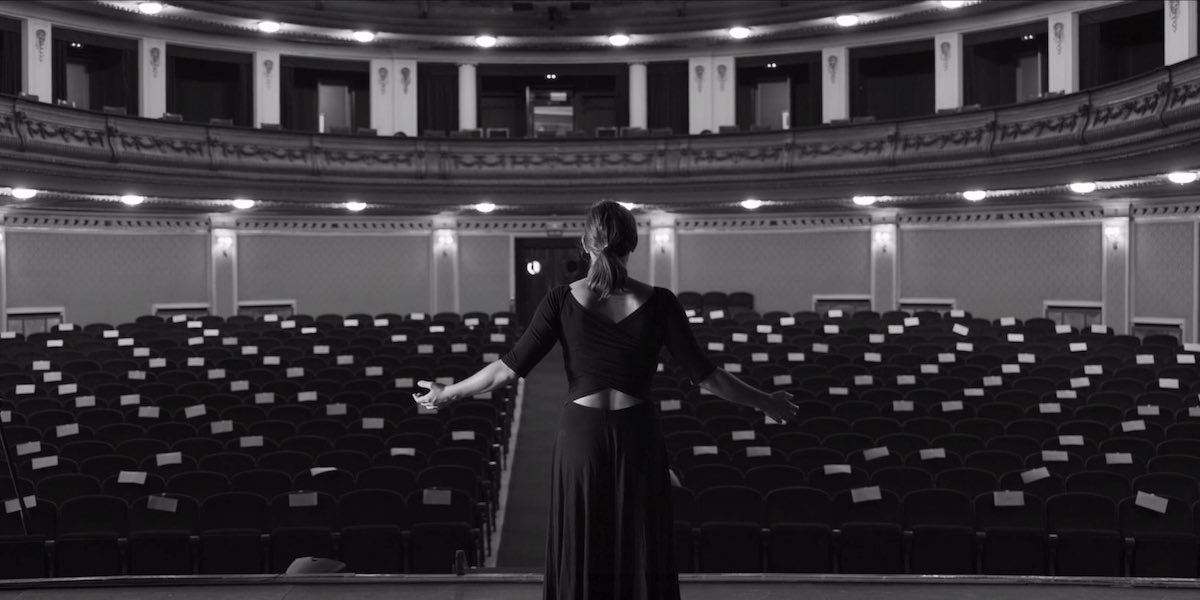
With Ama-das we wanted to approach the routine of our protagonists from calm and respect. From an observational cinematographic look where the characters and their experiences add color to a black and white bet. Nothing to distract us from the goal: listen and make them visible. Not in an informative way, the information is essential, but it is insufficient. With Ama-das we place the camera in a place where it cannot be seen, where it goes unnoticed so that we understand what is happening without filters. Each person is correctly informed so that, understanding what is happening, they can take a critical stance in the face of reality and act to modify it if they consider it appropriate, in this case, in the face of violence against women and specifically with disabilities. For this reason, and taking into account the invisibility of this group, this documentary has been considered as necessary and urgent.”
– Marga Gutiérrez Diez, Director