Squatters
(Okupas)
Catalina Santamaría / Colombia, United States / 2020 / 86 min
Havana Film Festival New York
Havana Star Prize, Special Jury MentionPuerto Rico Film Festival
Best International Documentary FeatureBogotá International Documentary Film Festival
Chicago Latino Film Festival
Houston Latino Film Festival
Latino & Iberian Film Festival at Yale
Cali International Film Festival
Women on Stage for Peace Festival Bogotá
The Art of Brooklyn Film Festival
Pricing
Related Films
 The Most Beautiful Deaths in the World(Las muertes mas bellas del mundo)Quique Aviles, Ellie WaltonWhen the US-backed war in El Salvador forced tens of thousands from their homes in the 1980s, many found refuge in Washington, DC, transforming the ...
 The Journey of MonalisaNicole CostaChilean-born performer and writer Iván Monalisa fully embraces his / her dual selves: scrappy, masculine Iván as well as diva, transvestite sex-worker ...
 Dreams of Chonta(Dreams of Chonta)Monica CohenNew York is the promised land for musicians, welcoming outstanding and virtuoso performers from every corner of the world hoping to find success. Diego ...
 100 Ways to Cross the BorderAmber Bay BemakAt a time when there is more and more news in the mainstream media about the U.S.-Mexico border, 100 Ways to Cross the Border (2022) presents the work ...
Synopsis
English and Spanish with English subtitles
With Ricardo León Peña Villa, José Osorio, Mario Bustamante, Tauno Biltsted, Geanme Marín, Isabel Angel, Orlando Godoy, Steven Ashmore, Siobhan Meow, Juan Salazar, Geerte Frenken and Carolyn Ratcliffe
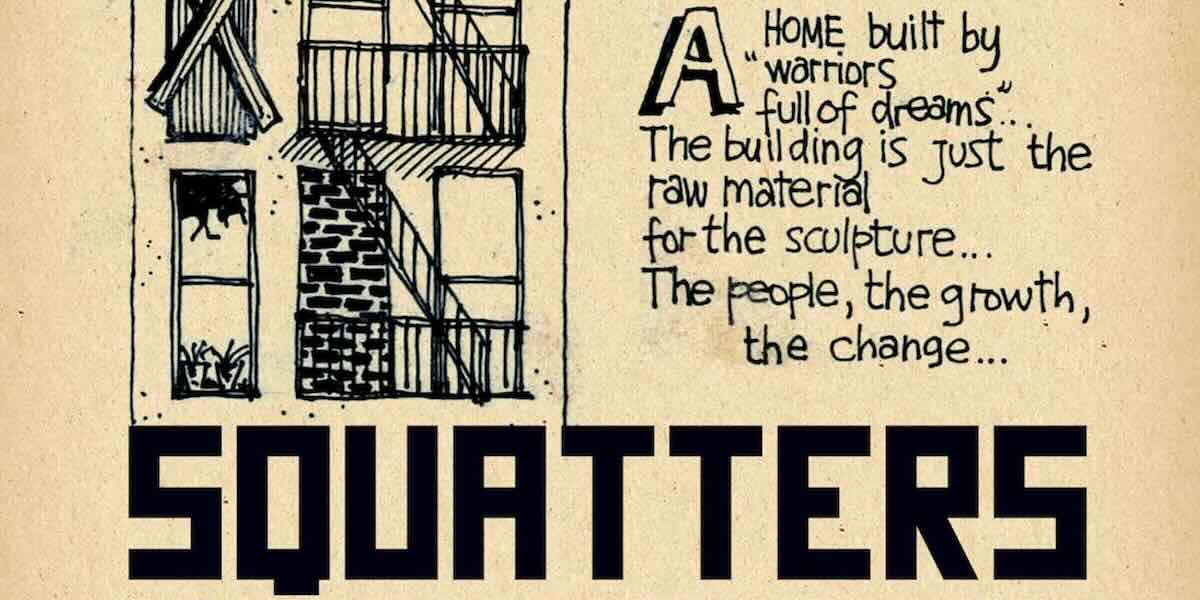
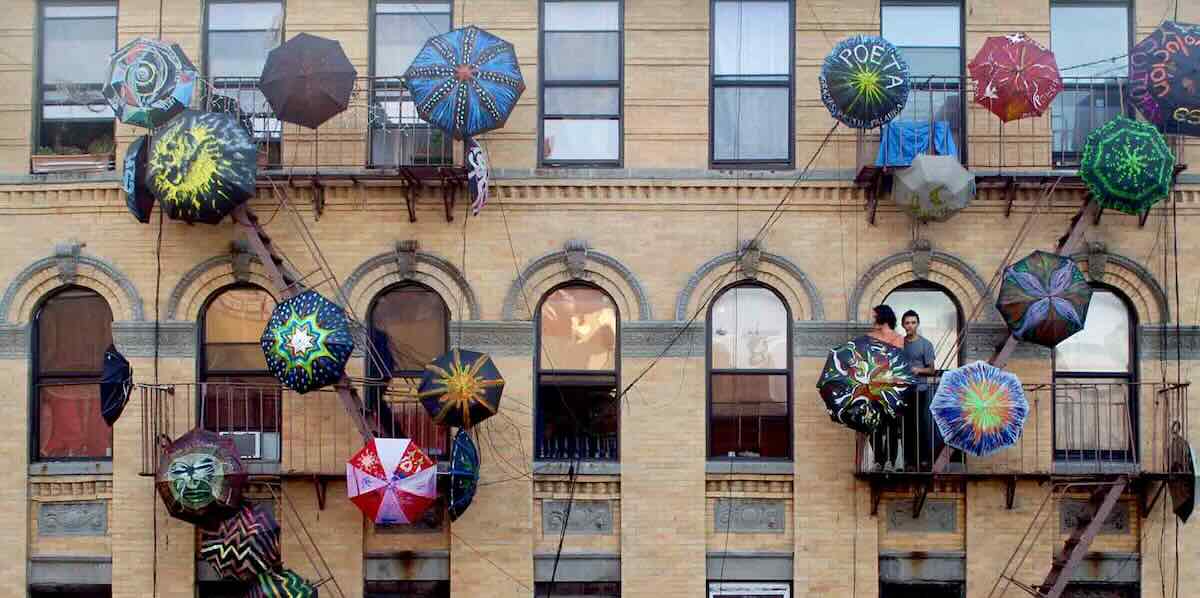
At the end of the 1980s, two abandoned buildings in Manhattan’s Lower East Side were occupied by a group of young artists, many of them immigrants, who renovated them and transformed them into self-sustaining homes outside the law. Drawing from multiple archival sources, Catalina Santamaría traces the history of Puerta 10 and Umbrella House through the voices of those who lived them.
The documentary incorporates footage filmed by the squatters themselves during the renovation process, offering an intimate record of a community that built its homes by hand. Through these personal archives and testimonies, the film reflects on the fragility of collective utopias and their ongoing struggle against time, memory, and the systems that surround them.
Related Subjects
About the Director
Since 2015, Santamaría has worked as a producer at CUNY TV, where she develops overall network strategy and oversees content planning.
Press
“If walls have ears, Catalina Santamaría is their spokesperson.” – Lise Clavi, Culture aux Trousses
“It’s the living tale of a utopia…” – Mariza Bafile, Viceversa Magazine
Notes on the Film
“I wish the world would be more like this house.” — written on the wall in Apartment 3D
“The walls were filled with scribbled comments left by visitors. Music played constantly, shifting from tango to blues and then salsa; the swirling smoke and collective euphoria were contagious. The door to 3D, Ricardo’s apartment, was always open. Everyone in the building was welcome. On the stairs leading up to 3D, dolls, photographs, and random bric-à-brac were plastered onto the cement. The building itself was a work in progress, with unfinished floors and ceilings. It was a unique and magical place.
I had recently arrived in New York in 1995 to study film, and at times I felt the loneliness of being away from my homeland, Colombia. Umbrella House soon became my refuge; I could go there for comfort whenever I needed. All I had to do was call up to Ricardo’s window in 3D. He was always there for his friends, no matter the time of day. I experienced many moments of happiness there and was inspired by the many artists who visited. It was during this time that I made my first audio recordings and shot my first 16mm footage of his apartment and the building.
Many years later, Ricardo died, and an urge arose in me to recover the material and tell his story. Grief brought me closer to him and to his sanctuary, Umbrella House—an abandoned building he helped restore and turned into his home. I began filming everything I could of his apartment: the walls covered in poetry, the books, the photographs. I interviewed his wife and other squatters who lived in Umbrella House, and combined this material to make a 10-minute short titled Umbrella House. But when I finished the film, I realized it told only the beginning of a longer, more complex story about an important chapter in New York City’s history.
Others had also become invested in its trajectory. When Orlando, another friend, saw the film, he became emotional and said, “I took Puerta 10 [another squatted building]. I was a squatter and filmed hours of footage of the process of its reconstruction.” After seeing his material, my curiosity grew, and I felt the need to expand Umbrella House into a longer documentary that would include Puerta 10. I began by interviewing Orlando and searching for more archival footage. I contacted another squatter, Isabel, who I was told had many photographs from when she first moved to Puerta 10. I ended up interviewing her. She was the first woman I interviewed, and her experience of raising her children under these conditions made me realize the importance of including different perspectives. I then decided to interview Geanne, another woman squatter in Umbrella House, who led me to Steven and Siobhan.
Interviewing Steven and Siobhan was crucial to the development of the documentary because they—alongside a Dutch squatter named Geerta—were among the people who originally took over Umbrella House. That is when the pieces began to fall into place: the stories of all the building’s inhabitants intersecting in countless ways. I realized how little I had known about a place that, to me, had simply been where my friend Ricardo lived.
As the documentary progressed, I came to understand the risks these squatters had taken in living on the margins of the law while pursuing their ideals. Their resilience deepened my admiration for them.
Their process of reconstructing and restoring both Umbrella House and Puerta 10 became intimately entangled with my own process of filming and editing Squatters. Their desire to build their own utopia mirrored my own desire to make a film that captured the spirit of their story. I hope that Squatters continues to reach wider audiences and inspires a sense of creativity, freedom, and hope.”
– Catalina Santamaría, Director