Guie’dani’s Navel
(El Ombligo de Guie'dani (XQUIPI' GUIE'DANI))
Xavi Sala / Mexico / 2019 / 119 min
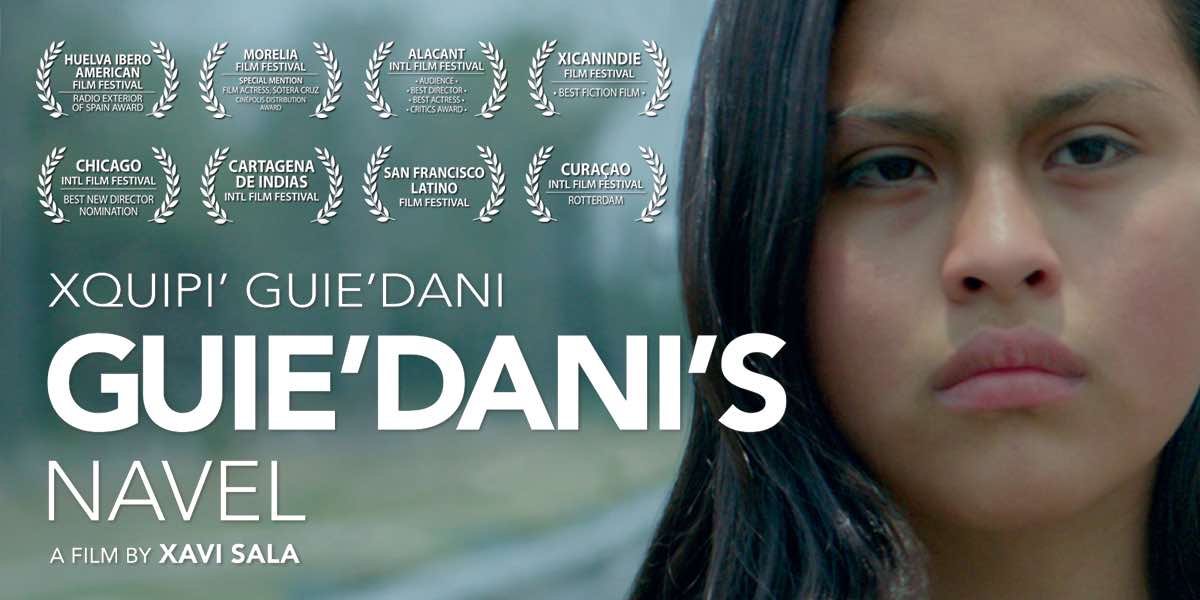
Huelva Ibero American Film Festival
Radio Exterior of Spain AwardMorelia Film Festival
Special Mention film actress, Sótera Cruz, Cinépolis Distribution AwardAlacant International Film Festival
Audience, Best Director, Best Actress, and Critics AwardXicanIndie Film Festival
Best Fiction FilmChicago International Film Festival
Best New Director NominationCartagena de Indias International Film Festival
San Francisco Latino Film Festival
Curaçao International Film Festival Rotterdam
Hola Mexico Film Festival
Pricing

Related Films
The Awakening of the Ants(El despertar de las hormigas)Antonella Sudasassi Furniss For thoughtful, demure young housewife Isa, life in a lush, postcard-perfect Costa Rican seaside village is far from anyone’s idea of a dream. She ...
Everybody Leaves(Todos se van)Sergio CabreraShot in Colombia (because the director didn’t get permission to film in Cuba) and featuring a cast consisting mostly of expatriate Cuban actors, ...
Bad Hair(Pelo Malo)Mariana RondónA nine-year-old boy’s preening obsession with straightening his hair elicits a tidal wave of homophobic panic in his hard-working mother, in this ...
Guaraní(Guaraní)Luis ZorraquínA heartfelt story, Guaraní follows fisherman Atilio as he travels with his granddaughter Iara to Buenos Aires. His great desire is to have a grandson to ...
This Time Tomorrow(Mañana a Esta Hora)Lina RodriguezBogotá, Colombia. 17-year-old Adelaida lives with her parents Lena, an event planner, and Francisco, a sculptor and art teacher. Together, they enjoy a ...Synopsis
Zapotec and Spanish with English subtitles - Spanish language audio description available *
With Sótera Cruz, Érika López, Majo Alfaroh, Yuriria del Valle, Juan Ríos, Valentina Buzzurro, Jerónimo Kesselman, Mónica del Carmen.
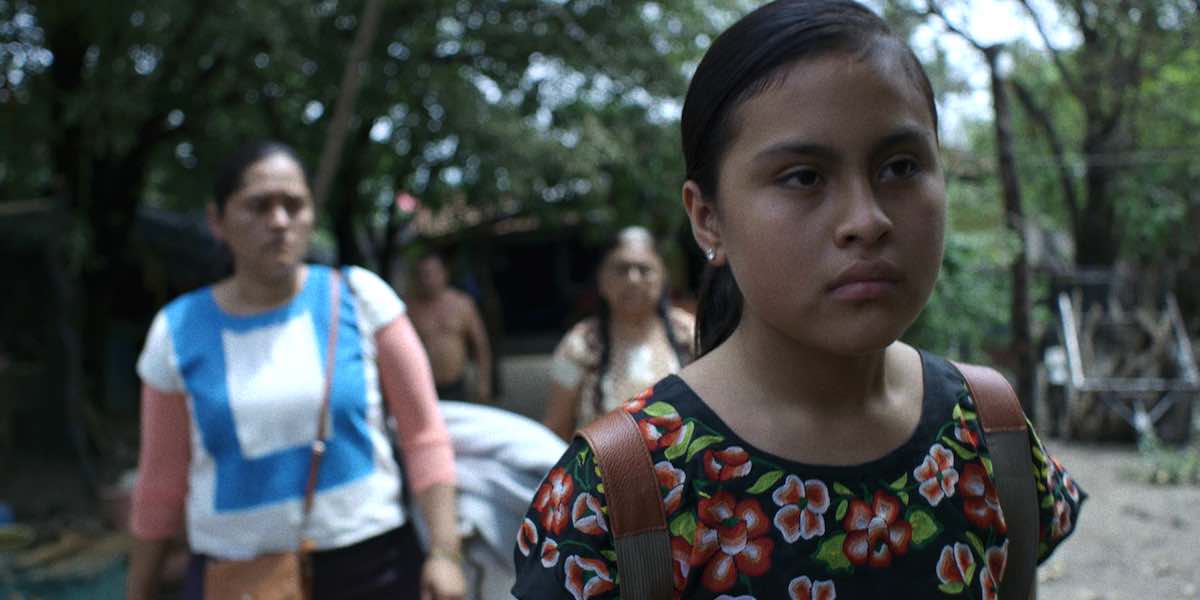
In a star-making performance, Sótera Cruz brings razor-sharp intensity to her portrayal of Guie’dani, a Zapotec girl determined to fight for her dignity.
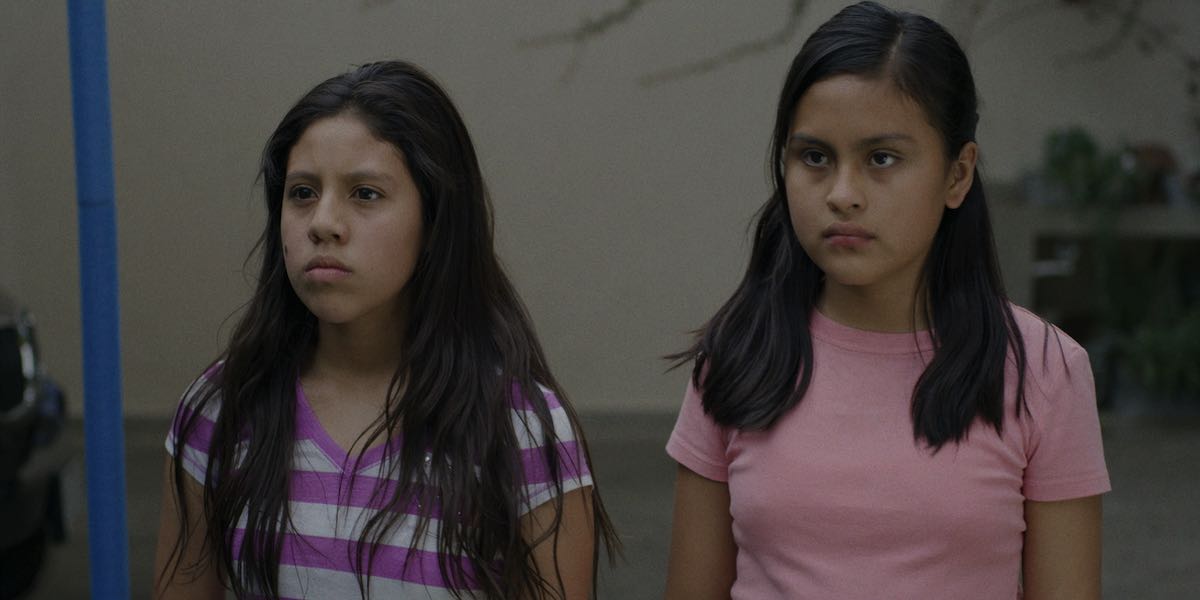
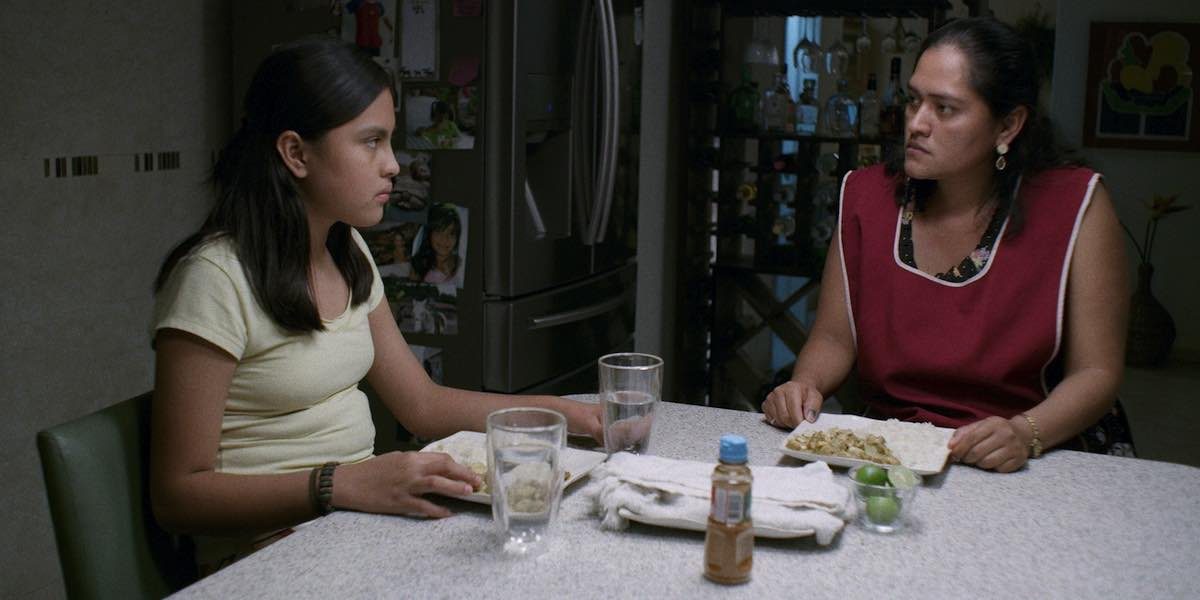
Guie’dani is dragged to Mexico City by her mother to help in her work as a housekeeper for an upper-middle-class family. There, the subtle psychological subjugation inflicted by the white family functions as a metaphor for the oppression of the old world by the new. Yet, Guie’dani rejects the life of servitude and seeks her own identity through a friendship with another rebellious teen.
A striking contrast to Alfonso Cuarón’s Roma, Guie’dani’s Navel is a unique coming-of-age narrative exploring the racism inflicted on indigenous people in Mexico and the empowerment of a new generation that refuses to accept it silently.
* Spanish language audio description available via All4Access App and/or .wav file when purchasing a DSL license.
Accessibility for these films was created by DICAPTA and funded under a grant from the U.S. Department of Education- Office of Special Education-OSEP, project “Enhanced Access to Video for Students with Sensory Disabilities through Emerging Technology,” TV Access H327C210001.
Related Subjects
About the Director

Available for Q&As, Masterclasses, and workshops upon request, in English or Spanish.
Book a Screen+Talk
Xavi Sala’s feature-length film debut, Guie’dani’s Navel (El ombligo de Guie’dani (Xquipi’ Guie’dani), 2018), was selected for more than 40 festivals. It won 9 awards, including Special Mention Award for Mexican feature film actress at the Morelia Film Festival (Mexico) and Radio Exterior of Spain Award at the Huelva Iberoamerican Film Festival (Spain). It was sold to HBO USA and was commercially released in Mexico and Spain.
Sala has directed nine short films and participated in many festivals. He received more than 80 awards and became internationally recognized. Some of these film festivals include Tampere, Oberhausen, Dresden, San Sebastian, Berlin, Guadalajara, São Paulo, Huesca, Alcalá de Henares, Los Angeles, Chicago, Montreal, Seoul, Sydney, Tanger, etc. His short Hiyab was nominated for the Goya Awards.
His latest film, The Silent Virgin (La virgen silenciosa), is set to premiere in 2025.
Press
“Sincere performances and thoughtfully written characters having profound interactions with one another. Suitable for audiences of a wide age range, it has immense potential for fostering discussions about discrimination (including same-race discrimination), casual and overt racism, classism, identity, cultural differences, wealth disparity, privilege, and more. It is highly recommended.” – Dorian Bowen, Archivist/Film Historian, EMRO
“Honest portrait that describes a reality of the country.” – Alejandro Alemán, Diario El Universal
“Catharsis fails and leads to a much more bitter and plausible resolution.” – Leonardo García Tsao, Diario La Jornada
“The antithesis of the portrayal of a maid maintaining and fulfilling her expected role in society as depicted in the movie Roma.” – Carlos Bonfil, Diario La Jornada
“Alongside Roma and The Chambermaid, Guie'dani's Navel breaks with a certain type of idealized and false representation that until recently was the norm in Mexican cinema.” – Fernanda Solórzano, Letras Libres
“The movie manages to show certain behaviors that have become normalized, but in reality, these are clear signs of racism that we have allowed to become ingrained in our traditions.” – Elizabeth Limón, En Filme
Notes on the Film
“Guie’dani’s Navel is a film that deals with identity, classism, hidden racism and discrimination against indigenous peoples in the Mexican society of today. We understand identity as the set of values, symbols, beliefs, and customs of a culture -in this case, the Zapotec culture- but which can be applied to all other cultures around the world. The Mexican people don’t see that they don’t see.”
– Xavi Sala, Director