These Walls
(Estos muros)
Alberto Pascual / Spain / 2021 / 67 min

Int'l Festival of Political Cinema
Encuentro Audiovisual Imágenes con Memoria
Audience AwardAgainst Silence Film Festival
The Millenium Film Festival
IMPACTE Film Festival
SARAQUSTA Film Festival
History Film Festival Rijeka
Ierapetra Int'l Doc Festival
Pricing
Related Films
 Spain in Two Trenches: The Civil War in ColorFrancesc Escribano, Luis CarrizoThe extraordinary and moving story of the convulsive years of the Spanish Civil War (1935-1939) is explained as never seen before. Thanks to the latest ...
 The Female Teachers of the Republic(Las maestras de la República)Pilar Pérez SolanoThe winner of the Best Documentary category at this year’s Goya Awards, The Female Teachers Of The Republic (Las maestras de la República) focuses ...
 Militiawomen: The Women Who Fought The Spanish Civil War(Milicianas)Tània Balló, Jaume MiróMilitiawomen narrates the intense investigation to discover the identity of five militia-women executed in Mallorca in 1936. One picture and the ...
 Clandestine Filmmaking in Franco’s Spain, 1960-1975(Cronica D'Una Mirada)Manuel BarriosHighly Recommended by EMRO. Read the review. Now available in North America for the first time, this award-winning, six-part documentary series uncovers ...
 Black Bread(Pa Negre)Agustí VillarongaThe Spanish selection for the 89th Academy Awards for Best Foreign Film, Black Bread is set in the war-ravaged Catalan countryside of the early 1940s ...
Synopsis
Spanish with English subtitles
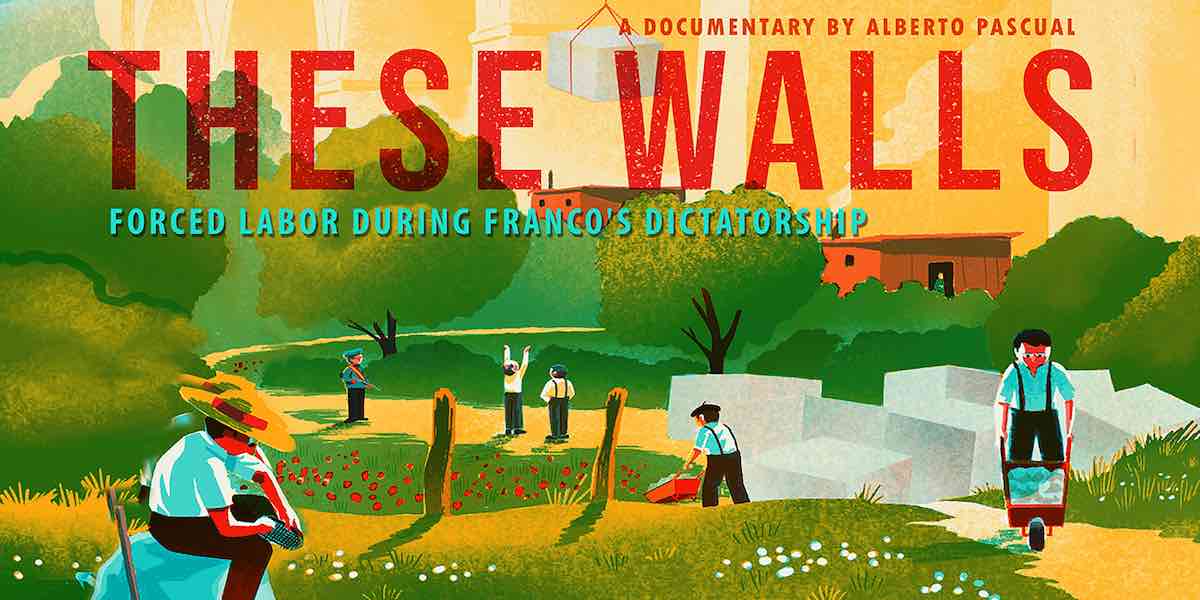
An investigative documentary, These Walls was inspired by the director’s chance discovery of a poem written on the ruins of a building during his childhood.
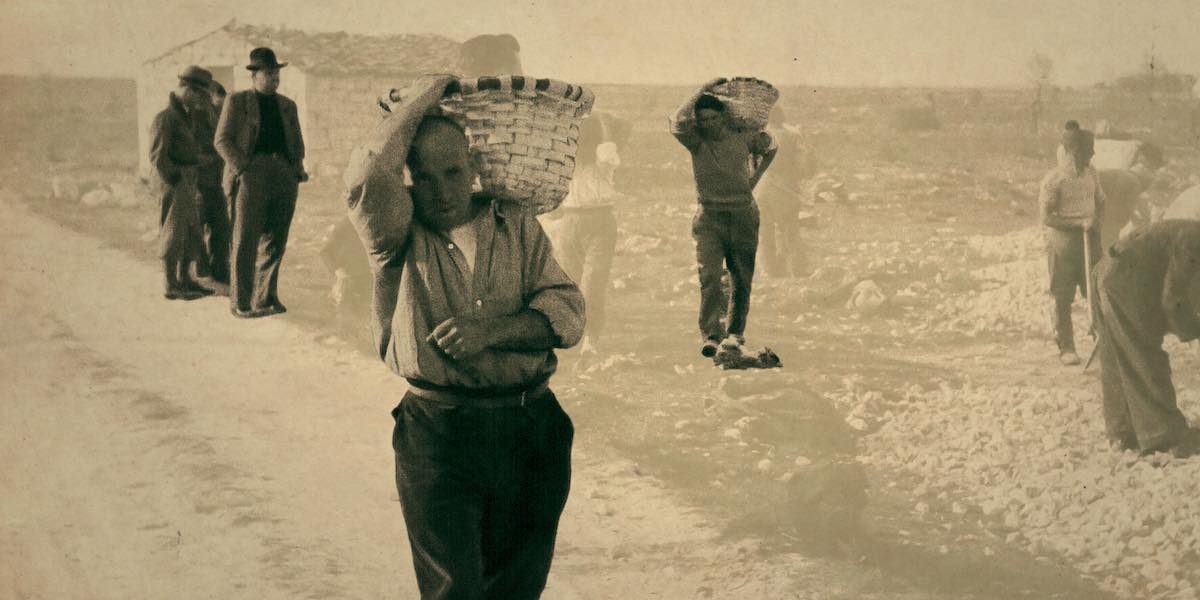
From this lonely moorland in the Sierra de Madrid, we discover one of the darkest episodes in Spain’s history. During the Franco regime, Penalty Redemption through Labour was a legal device that allowed public and private companies to use republican prisoners as forced labor.
The documentary follows Pascual as he delves into archives and libraries, listens to children of reprisal victims, and meets with childhood friends with whom he had played in those ruins, unaware of their origin and meaning.
Throughout the research process, archival material, and interviews with experts who have studied the Penalty-Redemption system from their various disciplines, Pascual exposes how this device was used in virtually all economic sectors throughout the country.
Related Subjects
About the Director
He was the executive producer of the documentary film The Code: Economic and Financial Crimes Against Humanity (2018), which has participated in multiple festivals and film series on ecology and sustainability.
His latest film, These Walls (2022), is a documentary research work on one of the darkest episodes of Franco’s history: the redemption of sentences for work.
Press
“I highly recommend These Walls for a course on documentary for its style - and for courses on History, Politics, and Criminal Justice for its substance. The film could be used as part of a larger discussion about modern day examples of penalty redemption through labor where private and public companies utilize the labor of citizens either to change their ideological beliefs, or for profit.” – Jennifer Dean, EMRO
“The Spanish Civil War raged for three brutal years from 1936 to 1939. The American ambassador at the time saw this conflict as a ‘dress rehearsal’ for the Second World War. Though the conflict was relatively short, Francisco Franco’s fascist regime was not, and its long-lasting scars still stain the land.” – J. Zimmerman, Video Librarian
Notes on the Film
“Today’s society has great deficiencies in the knowledge of our recent history. Triumphant narratives define coexistence, while other narratives remain in the shadows, distorting the mirror in which we look at ourselves. Silence and oblivion still survive today. Does distorted memory interfere with who we are? Above all, These Walls is a place for virtual memory, a tribute to the more than 2,000 prisoners who passed through the Soto del Real Penal Detachment, formerly known as Chozas de la Sierra, which are likewise part of the more than 6,000 who endured the works of the train line.”
– Alberto Pascual, Director