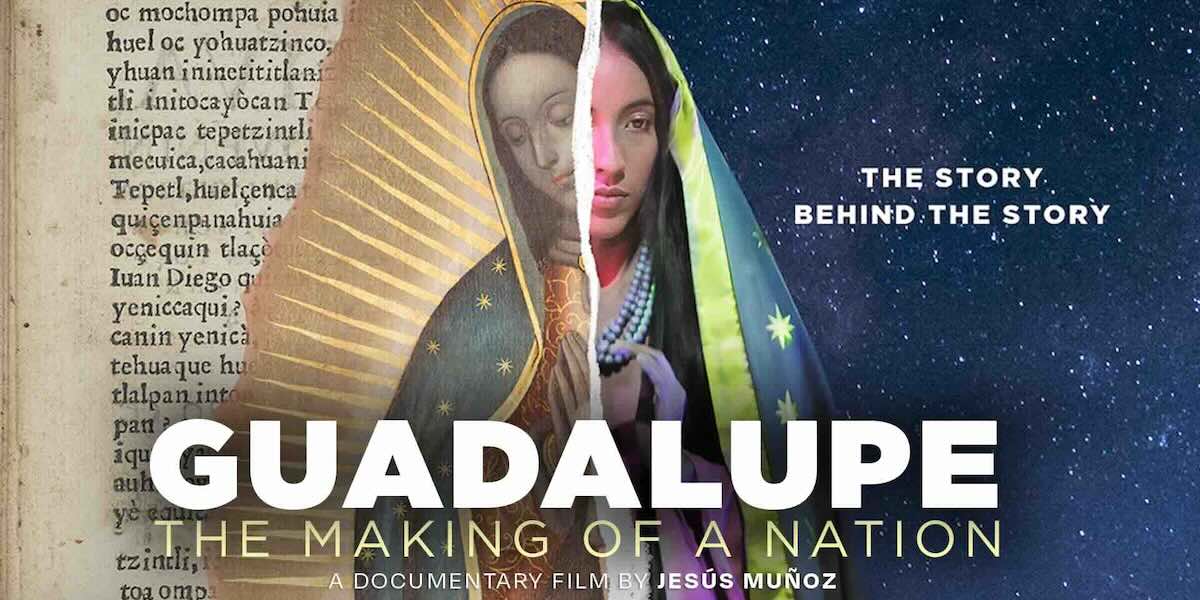
Guadalupe: the Making of a Nation
(Tonantzín Guadalupe)
Jesús Muñoz / Mexico / 2023 / 91

Ogeechee International History Film Festival
Best Feature FilmOklahoma Cine Latino Film Festival
Best CinematographyWorldFest Houston
Remi WinnerEl Paso Film Festival
Audience AwardExperimental Forum 2024
Honorable MentionPhiladelphia Latino Arts & Film Festival
Seattle Latino Film Festival
Georgia Latino Int'l Film Festival
Pricing
Related Films
 God(Dios)Christopher Murray, Josefina Buschmann, Israel PimentelA cinematic mosaic depicting Pope Francis’ 2018 visit to Chile, God explores the constant tension between the social creation of God in different ...
 Embrace of the Serpent(El abrazo de la serpiente)Ciro GuerraACADEMY AWARD® BEST FOREIGN LANGUAGE FILM NOMINEE A breathtaking ethnographic odyssey through the heart of the Colombian Amazon, Embrace of the ...
 Even the Rain(También la Lluvia)Icíar BollaínIn Even the Rain by Icíar Bollaín, filmmaker Sebastian (Gael García Bernal) and his cynical producer Costa (Luis Tosar) arrive in Cochabamba, Bolivia ...
 Guie’dani’s Navel(El Ombligo de Guie'dani (XQUIPI' GUIE'DANI))Xavi SalaIn a star-making performance, Sótera Cruz brings razor-sharp intensity to her portrayal of Guie’dani, a Zapotec girl determined to fight for her ...
 Beyond the Ruins(Beyond the Ruins)Brady SkyeBeyond the Ruins explores what it means to be Yucatecan Maya in the 21st century. Starting at the ancient city of Coba, the film takes viewers deep into ...
Synopsis
Spanish, Nahuatl, Mixe with English subtitles
With Mabel Cadena (Narrator), Dalia Xiuhcoatl, Juan Antonio Saldaña, Eduardo Cortejosa, Andrés de León, José Valentín González, José Carlos Illanes, Héctor Tomás Katsarelis, Martijn Kuiper, Carlos Licea, Alfonso López, Pablo Mendioza, Layo Oviedo, Alberto Pavón, Óscar Piñero, Sergio Recio, Maurilio Ricaño, Albert Riera, Juan Carlos Saenz, José Salof, Cirilo Santiago, Óscar Villalobos
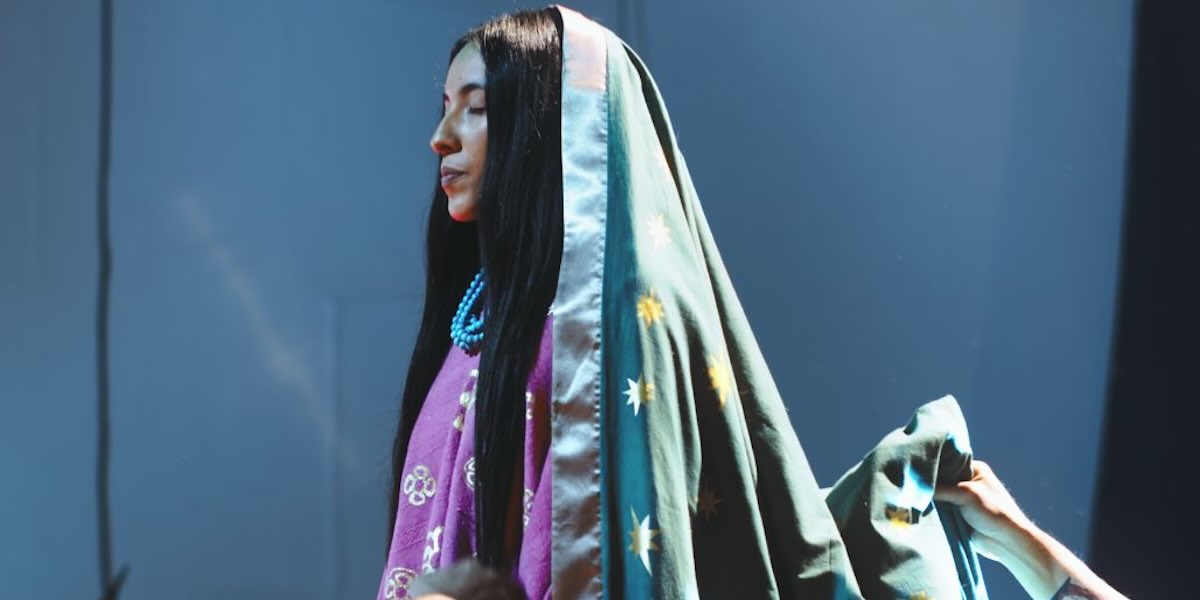
Each year, more than twenty million pilgrims travel to Mexico City to venerate the Virgin of Guadalupe. Known as the “brown-skinned” virgin, she is said to have appeared before Juan Diego, an Indigenous peasant, during the early years of Spanish colonization. A defining cultural and spiritual icon, she embodies the profound syncretism born from the encounter between Indigenous and European worlds. Beyond her religious significance, her image became a powerful emblem of identity—rallying New Spain’s patriotic fervor and ultimately serving as a banner for Mexico’s independence.
Yet the Church’s official account of Guadalupe’s miraculous apparition has long obscured deeper inquiry into the origins of this enduring symbol. This groundbreaking documentary by Jesús Muñoz challenges that narrative, delving into the silences of history to uncover the contested events and layered truths behind her creation. In doing so, it offers a bold reexamination of one of Mexico’s most revered figures—and reveals how myth, faith, and history intertwine to shape the nation we know today.
About the Director
Muñoz’s documentaries frequently engage with controversial subjects, consistently aiming to guide audiences toward more nuanced and reflective perspectives.
Press
“It stirs, oxygenates, and sheds light where myths and violence tried to bury themselves.” – Ariadna González, El Hype
“An audacious and complex exercise: proposing the Virgin of Guadalupe as a first moment in the construction of Mexican identity.” – Carlos Morales, IMCINE
Notes on the Film
“When crafting narratives, the result inevitably falls somewhere between reality and myth. Documentary filmmaking is no exception; what appears on screen is never entirely “real.” The moment a subject is chosen or a camera angle is selected, bias is introduced. No matter how subtle, some degree of manipulation is always present. During the editing process, the filmmaker’s subjective influence becomes even more pronounced, as it should be.
To explore the complex space between fiction and reality in documentary filmmaking, I chose to embrace three distinct narrative styles within a single film. This became the experimental core of the project. While the film’s central theme is the miraculous apparition of Mexico’s Virgin of Guadalupe in the 16th century, the use of these three narrative modes creates a layered and original structure. It invites the viewer to reflect not only on the historical subject itself, but also on the nature of storytelling, showing how the same reality can be interpreted through three fundamentally different lenses.”
– Jesús Muñoz, Director